
AI is no longer just answering questions. In 2026, it is starting to take action.
The biggest technology trend this year is the rise of AI agents: digital systems that can understand a goal, plan steps, use tools, complete tasks, and work under human supervision. For readers, workers, creators, and business owners, this shift matters because AI is moving from “chat with me” to “help me get this done.”
What Are AI Agents?
An AI agent is a smart software assistant that can do more than generate text. Instead of simply replying to a prompt, it can help complete a task from beginning to end.
For example, a normal chatbot might tell you how to write a sales email. An AI agent could draft the email, personalize it for each customer, check your CRM, schedule follow-ups, and alert you when a lead responds.
That difference is why AI agents are becoming one of the most important technology trends of 2026.
Why AI Agents Are Trending Now

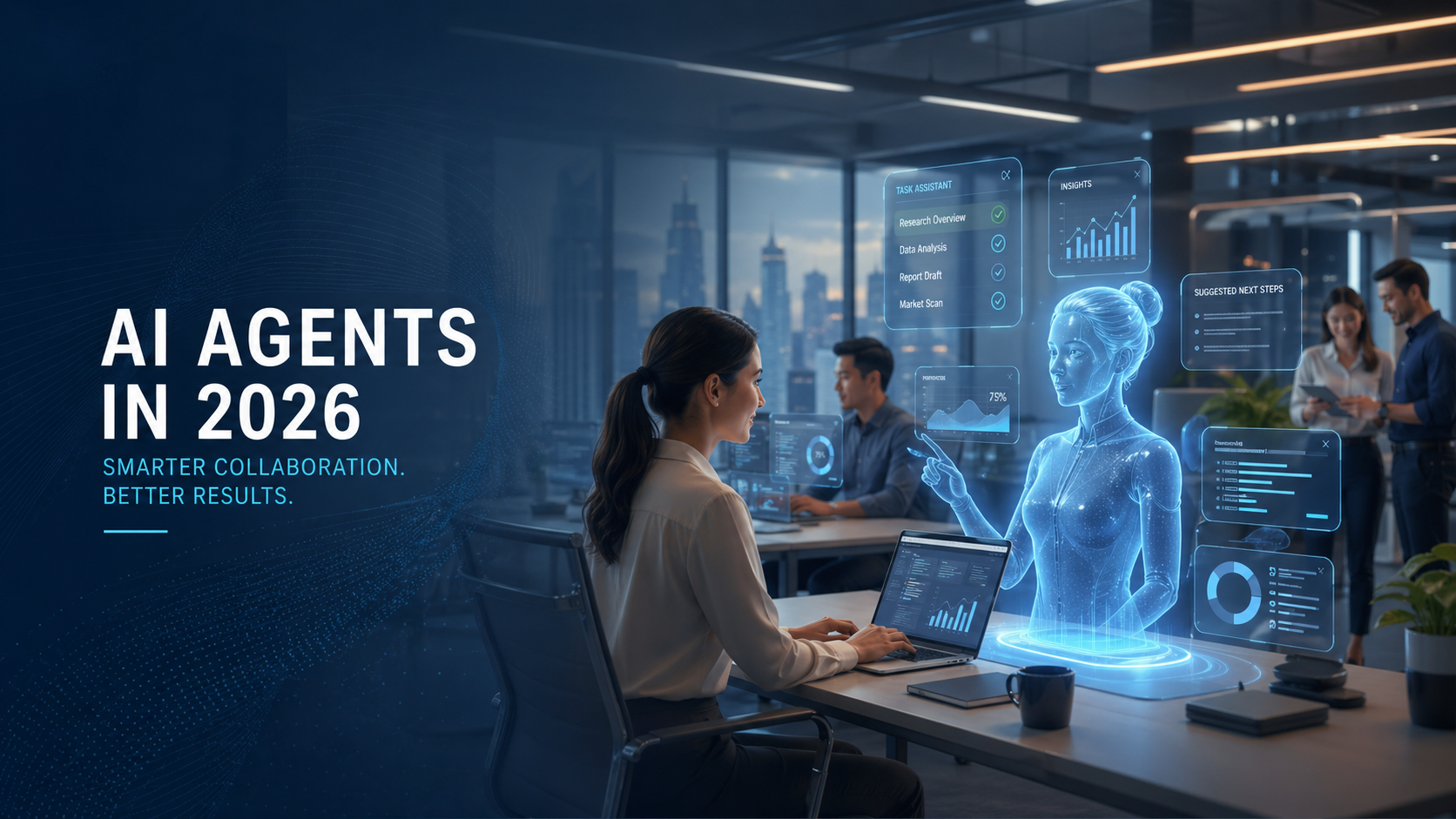
Human professional working with glowing AI agents in a futuristic digital workspace.
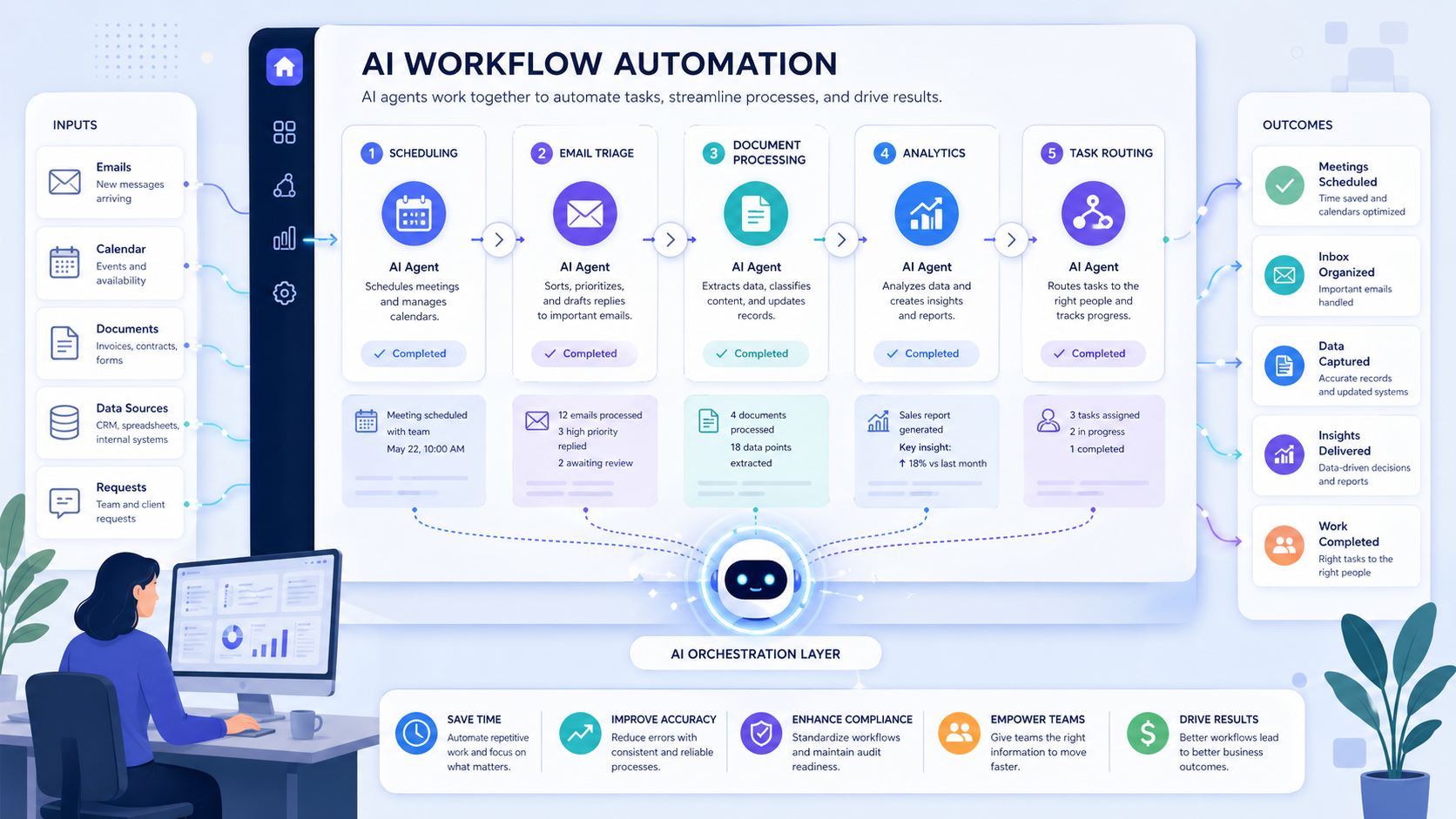
AI agents connecting business apps, tasks, and data in an automated workflow.
Businesses spent the last few years experimenting with generative AI. Many people used AI for writing, brainstorming, summarizing, coding, and customer support. But in 2026, the focus is shifting from simple productivity tools to agentic workflows.
Analysts and technology leaders are forecasting wider use of task-specific agents inside enterprise applications. That means AI agents are not just another app trend. They are becoming part of the software people already use every day.
1. AI Agents Will Make Everyday Work Faster
One of the clearest benefits of AI agents is time savings.
Workers spend hours each week on repetitive tasks: sorting emails, preparing reports, searching documents, updating spreadsheets, scheduling meetings, checking customer records, and moving information between apps. AI agents can reduce that busywork by handling routine steps in the background.
Instead of asking, “Can AI write this for me?” the better question becomes, “Which part of this workflow can an AI agent complete safely?”
This will be especially valuable for teams that manage large volumes of repeated tasks, such as sales teams, support teams, HR departments, finance teams, and operations managers.
2. Customer Service Will Feel More Personal
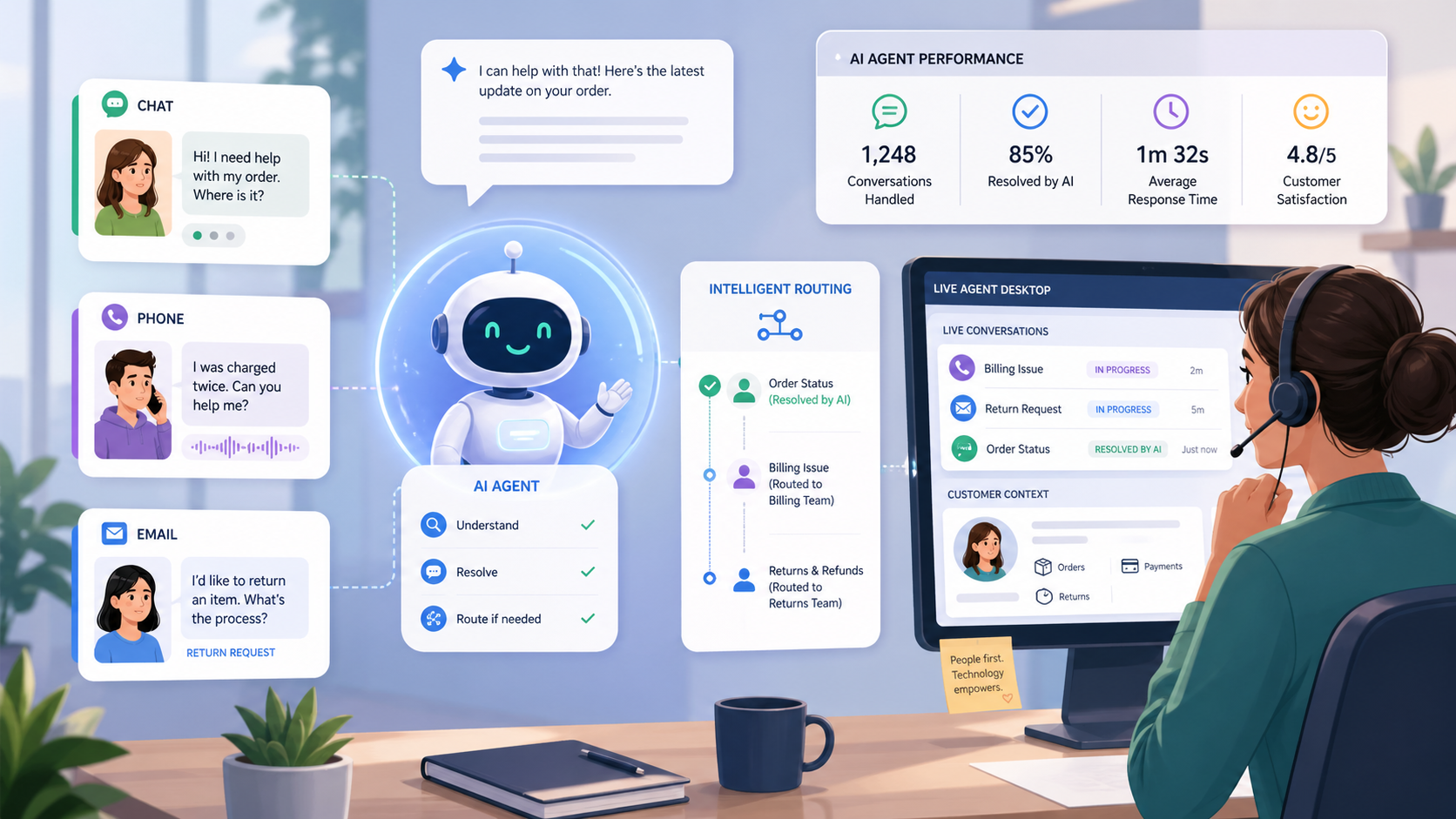
Friendly AI assistant helping customers through personalized digital support.
Friendly AI assistant helping customers through personalized digital support.
For years, customers have complained about robotic chatbots that misunderstand questions and send people in circles. AI agents could change that experience.
A well-designed customer service agent can understand context, check order history, answer questions, suggest solutions, escalate complex cases, and help customers faster.
This does not mean every customer service role disappears. It means human support teams may spend less time answering the same basic question repeatedly and more time solving sensitive, emotional, or high-value problems.
3. AI Agents Will Change Creative Workflows
AI agents are also entering creative tools. The direction is clear: instead of manually clicking through every tool, creators may increasingly describe what they want and let AI agents handle technical steps.
For designers, marketers, YouTubers, advertisers, and social media managers, this could make content production faster. But the best results will still come from human taste, strategy, storytelling, and editing.
4. Coding and Software Development Will Move Faster
AI agents are already changing how software is built.
Developers are increasingly using AI to generate, review, migrate, and test code. This does not mean human developers are no longer needed. It means the developer’s role is changing.
In the agentic AI era, developers may spend more time reviewing, designing systems, improving architecture, testing, securing code, and guiding AI tools. The value shifts from typing every line manually to knowing what should be built, why it matters, and whether the result is safe and reliable.
5. Cybersecurity Teams Will Use AI Agents for Faster Response
Cybersecurity team using AI agents to monitor alerts and protect digital systems.
Security teams face an overwhelming number of alerts. Many alerts are low priority, but some are urgent. Missing the wrong signal can be costly.
AI agents can help by monitoring alerts, investigating suspicious activity, summarizing risks, recommending actions, and supporting faster incident response.
This is important because cyber threats are becoming faster and more complex. Human analysts still make critical decisions, but AI agents can help them focus on the alerts that matter most.
The Big Challenge: Trust
The rise of AI agents also creates new risks.
A chatbot giving a wrong answer is one problem. An AI agent taking the wrong action is a bigger one.
That is why businesses should not rush blindly into AI automation. They need clear rules, human approval for sensitive actions, strong data protection, audit trails, employee training, and regular testing.
The winning companies will not be the ones that use the most AI. They will be the ones that use AI responsibly, safely, and strategically.
How Small Businesses Can Use AI Agents
Small business owner using AI agents to manage marketing, orders, and daily tasks.
Small business owner using AI agents to manage marketing, orders, and daily tasks.
AI agents are not only for large corporations. Small businesses can use them too.
A local business could use AI agents to respond to customer inquiries, draft social media posts, summarize reviews, manage appointments, track invoices, create product descriptions, or organize leads.
A freelancer could use an AI agent to prepare proposals, research clients, build content calendars, and manage routine admin work.
A creator could use AI agents to plan videos, repurpose long content into short posts, generate thumbnails, organize ideas, and schedule publishing.
The key is to start small. Choose one repetitive workflow, test it, check quality, and keep a human in control.
Practical Tips Before Using AI Agents
- Start with low-risk tasks. Use AI agents first for drafts, summaries, research organization, and internal workflows.
- Keep human review. Do not let agents send sensitive messages, approve payments, or change important records without supervision.
- Protect private data. Avoid giving agents unnecessary access to customer, financial, or confidential information.
- Measure results. Track whether agents actually save time, improve quality, or reduce errors.
- Train your team. People need to understand what AI agents can and cannot do.
The Future of Work Is Human Plus AI
AI agents will not replace every worker, creator, or business owner. But they will change what productive work looks like.
The future belongs to people who know how to give clear instructions, judge results, improve workflows, and combine human creativity with AI speed.
In 2026, the most valuable skill may not be using AI once in a while. It may be learning how to manage a team of digital assistants that help you think, create, sell, support, secure, and grow.
AI agents are not just the next trend. They are becoming a new layer of work.
SEO FAQ
What are AI agents?
AI agents are AI-powered systems that can understand a goal, plan steps, use tools, and complete tasks with human guidance or supervision.
Why are AI agents important in 2026?
AI agents are important because they are moving AI beyond simple chat and into real workflows such as customer service, coding, cybersecurity, marketing, research, and business automation.
Will AI agents replace jobs?
AI agents may automate some repetitive tasks, but many roles will shift rather than disappear. People will still be needed for judgment, creativity, strategy, relationship-building, and oversight.
How can small businesses use AI agents?
Small businesses can use AI agents for customer replies, appointment scheduling, content creation, lead management, invoice tracking, research, and basic admin tasks.
Are AI agents safe to use?
AI agents can be useful, but they require careful setup, human review, data protection, and clear limits, especially when handling sensitive information or taking real-world actions.
Research Sources
- Google Cloud, 5 ways AI agents will transform the way we work in 2026
- Gartner, Gartner Predicts 40% of Enterprise Apps Will Feature Task-Specific AI Agents by 2026
- McKinsey, State of AI trust in 2026: Shifting to the agentic era
- Axios, Adobe brings agentic AI to Firefly, with Claude next
- Business Insider, Google says 75% of the company’s new code is AI-generated