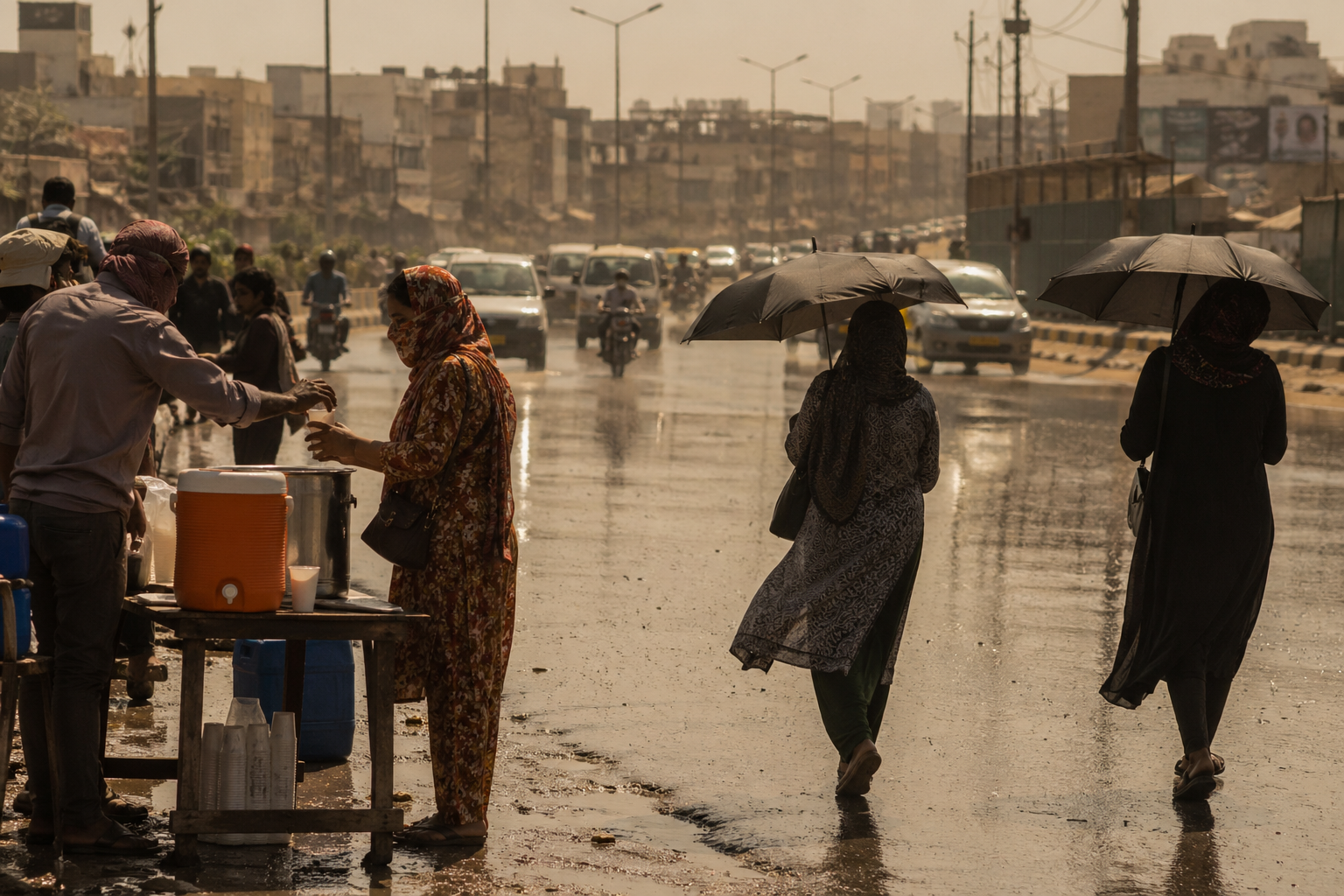

India is entering another dangerous stretch of extreme summer weather, and this time the warning signs are arriving early and across a wide area. In late April 2026, the India Meteorological Department said many parts of northwest, central, and peninsular India were already seeing maximum temperatures around 40°C to 44°C, with heatwave conditions expanding across several states. By April 27, IMD’s morning bulletin reported 40°C to 46°C temperatures across much of the country, with Akola in Vidarbha touching 46.9°C.
What makes this episode especially concerning is that it is not only about brutal afternoon heat. Warm nights are also becoming more common, which means the body gets less time to recover. That is one reason this year’s heat feels relentless even in cities that are not setting all-time records.
Summary
India’s 2026 heatwave is being driven by a mix of broad seasonal warming, region-wide heatwave conditions, hotter nights, and city-level heat buildup. Some places are recording exceptional April temperatures, while many others are seeing temperatures far above normal for this time of year. For households, workers, older adults, children, and people with chronic illness, the biggest risk is prolonged exposure without enough cooling or hydration.
Why so many cities are seeing extreme heat at once
1. The heat is spread across multiple regions, not one isolated pocket
This is not a single-city event. IMD’s April 25 advisory said heat stress was building across northwest, central, and peninsular India, and its seasonal outlook for April to June 2026 warned of above-normal heatwave days in parts of east, central, and northwest India as well as the southeast peninsula.
That broad regional pattern matters. When several large belts of the country heat up together, more cities cross into dangerous temperature ranges at the same time. Even where absolute records are not broken, the result can still be exceptional and hazardous.
2. Nights are staying hotter, which makes the heat more dangerous
One of the most important parts of the 2026 story is nighttime heat. IMD has repeatedly flagged “warm night” conditions alongside daytime heat alerts. Under IMD’s criteria, a warm night is declared when the minimum temperature stays at least 4.5°C above normal, in places already hot enough to qualify.
That matters because people do not recover well if homes, streets, and buildings stay hot after sunset. Sleep suffers, dehydration builds, and heat stress carries into the next day. In practical terms, the heatwave lasts longer than the afternoon reading suggests.
3. Urban heat is amplifying what people feel on the ground
Cities usually cool more slowly than nearby rural areas. Concrete, asphalt, dense construction, limited tree cover, and waste heat from traffic and cooling systems all trap heat. A 2024 open-access review of urban heat island research in India found urban heat island intensity can vary by 2°C to 10°C in Indian cities, and that the effect is especially pronounced at night.
That helps explain why even “ordinary” hot-weather warnings can feel much worse in dense neighborhoods. In a city apartment, roadside market, factory area, or low-ventilation settlement, the lived experience of heat can be much harsher than a single weather-station number suggests.
4. Climate change is loading the dice
No single heatwave has just one cause, but the background climate is clearly getting hotter. The World Meteorological Organization said in June 2025 that Asia is warming nearly twice as fast as the global average, and that 2024 was the warmest or second-warmest year on record in Asia, with widespread and prolonged heatwaves.
That long-term warming trend raises the baseline from which heatwaves begin. So when weather patterns line up for a hot spell, the temperatures can climb higher, spread farther, and stay elevated longer.
5. Early-season heat can feel worse because people are less prepared
Extreme heat in late April is dangerous partly because many people are not yet fully adapted to peak-summer conditions. Schools, workplaces, hospitals, transport systems, and households may still be adjusting routines. Water demand rises quickly, power demand spikes, and outdoor workers often bear the heaviest burden.
So even when the calendar says summer has only just begun, the health impact can look more like peak-season stress.
Are all these cities really “breaking records”?
Some cities are posting record or near-record April heat, while others are seeing temperatures that are simply far above normal rather than historic all-time highs. It is safest to say India is experiencing a broad surge of exceptional heat, with some local records being challenged or broken and many more places entering dangerous heat territory at once.
That distinction matters because public safety does not depend on whether a number is an all-time record. A city can avoid a record and still face serious heat illness risk.
Who is most at risk
The greatest danger falls on people who cannot easily avoid exposure or cool down afterward, including:
- Outdoor workers
- Older adults
- Infants and young children
- Pregnant women
- People with heart, lung, or kidney conditions
- People living alone
- Households with poor ventilation or unreliable power
- People without access to clean drinking water or shaded shelter
How to stay safe during the heatwave
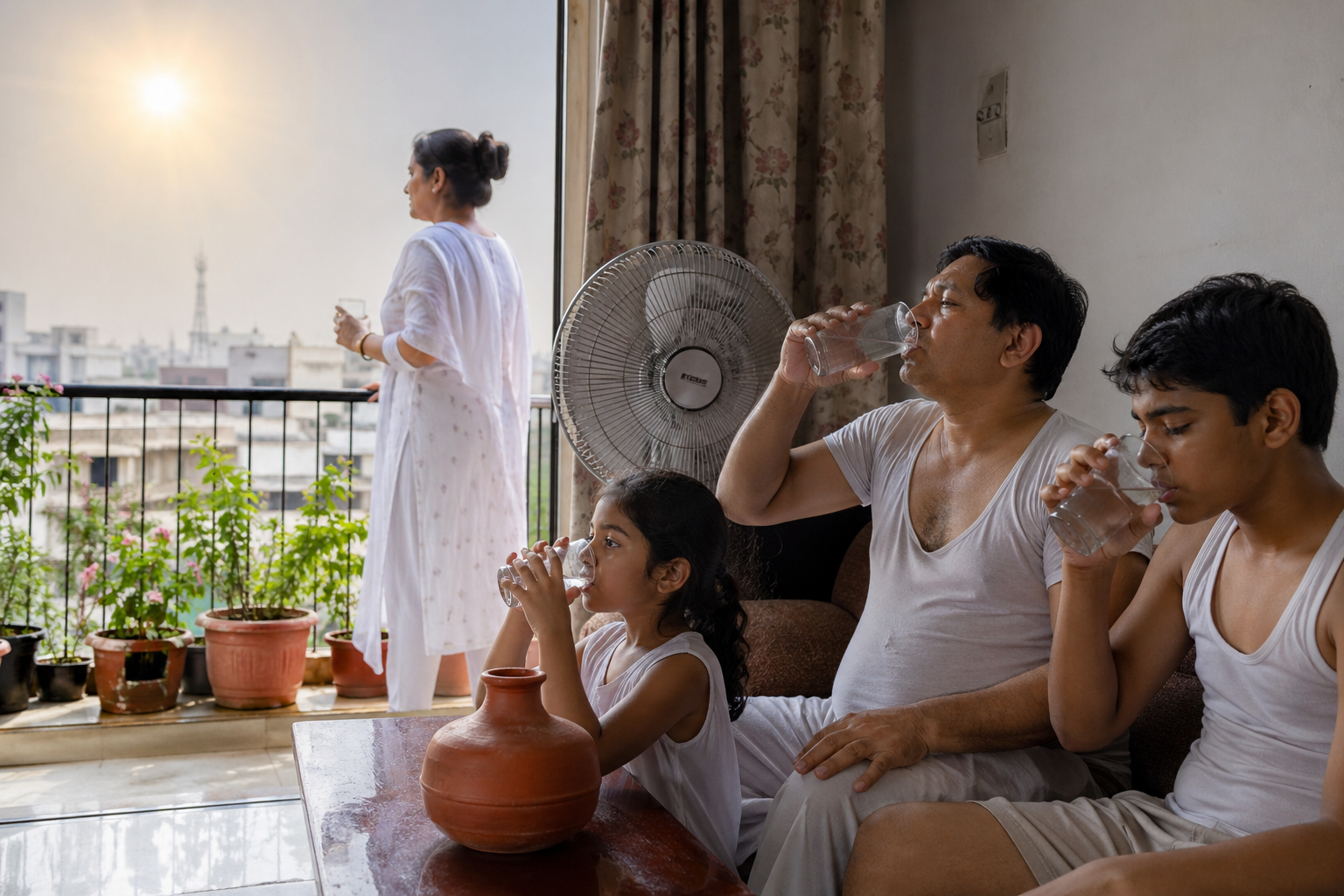
A family in light clothing drinking water and staying cool with fans and shade during a severe heatwave.
Stay ahead of dehydration
Drink water regularly, not just when you feel thirsty. IMD also recommends ORS and homemade drinks such as lemon water, buttermilk, lassi, and rice water.
Avoid peak heat hours
Try to limit outdoor activity in the afternoon, especially for heavy work, long commutes, or exercise. Shift essential tasks to early morning or late evening when possible.
Dress for heat, not just sun
Wear lightweight, loose, light-colored cotton clothing. Cover your head with a cap, cloth, or umbrella when outdoors.
Watch indoor heat too
If your home holds heat at night, ventilate when conditions allow, use fans wisely, close curtains during the hottest hours, and spend time in cooler public spaces if available.
Know the warning signs
Seek help quickly if someone has dizziness, headache, confusion, nausea, rapid pulse, unusually hot skin, fainting, or stops sweating despite overheating.
Check on others
Older relatives, neighbors living alone, and outdoor workers may need a reminder to hydrate, rest, or get medical attention sooner than they think.
The bigger lesson from 2026
India’s 2026 heatwave is not just a weather story. It is a public health story, a city-planning story, and an infrastructure story. The combination of hotter days, warmer nights, dense urban heat, and a warming climate means extreme heat is becoming a more persistent part of life for millions of people.
That is why the smartest response is not only to track the next temperature spike, but to treat heat as a serious risk that demands planning at home, at work, and at the city level.
Conclusion
The reason so many Indian cities are seeing extreme heat at once is not one single trigger. It is the overlap of regional heatwave conditions, above-normal night temperatures, urban heat buildup, and a warming climate that is making hot spells more severe. Whether or not every city breaks a formal record, the danger is real. The safest approach is to act early, reduce exposure, hydrate aggressively, and pay close attention to official local warnings.
Sources used:
- IMD / PIB advisory, April 25, 2026
- IMD monthly and seasonal outlook, March 31, 2026
- IMD morning heat bulletin, April 27, 2026
- IMD national bulletin, April 21, 2026
- WMO on Asia warming trends, June 23, 2025
- IIT Roorkee-linked paper on hot days and warm nights in India
- Open-access review on urban heat islands in India