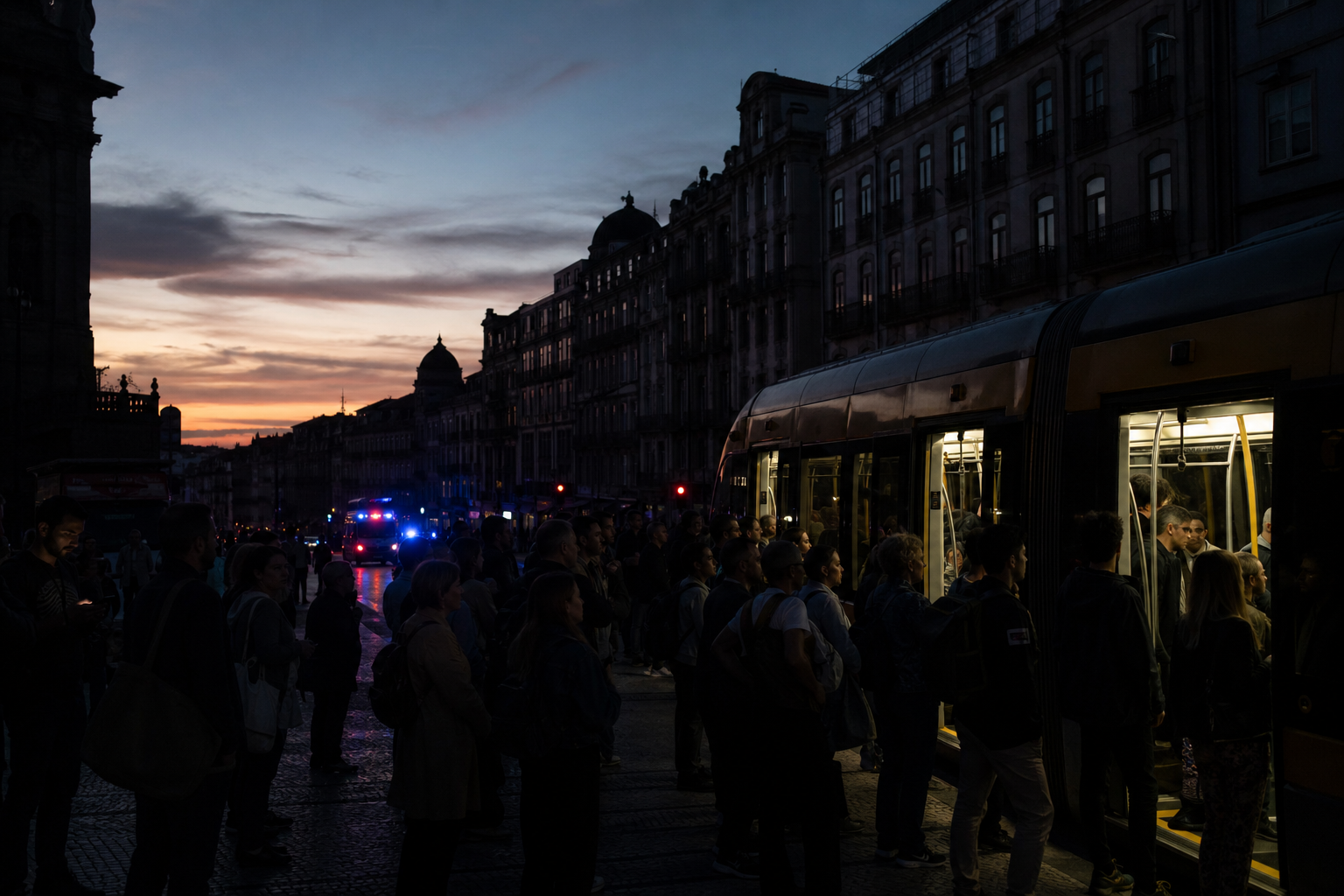

When a major blackout hits a developed economy, it instantly becomes more than a local infrastructure story. It becomes a stress test for modern life.
That is why the Spain power outage is drawing renewed attention today. People are not only searching for what happened. They also want to know how a large grid can fail so quickly, why the disruption spread across borders, and whether something similar could happen elsewhere.
Quick Summary
A major outage affecting Spain and Portugal became one of Europe’s most closely watched grid failures because it showed how tightly connected modern electricity systems really are. Early reporting focused on the immediate disruption and uncertainty over the cause. Later technical findings pointed toward a combination of system instability, cascading failures, and weaknesses in how the grid handled stress, rather than a single dramatic trigger.
The bigger lesson is simple: power systems are incredibly advanced, but they are not invincible. When multiple weaknesses line up at once, the effects can move fast.
Why This Story Is Trending Again

Grid operators monitor system instability as energy networks show how quickly localized failures can become regional crises.
The topic is resurfacing because blackout stories combine three things readers care about at once:
- They affect daily life immediately.
- They raise wider fears about infrastructure reliability.
- They invite bigger questions about energy transition, resilience, and national preparedness.
That makes the Spain outage a natural search spike. It is not just a breaking-news curiosity. It is the kind of event people revisit because it feels like a preview of a more fragile future.
What Happened During the Outage
At the most basic level, the outage was a sudden, large-scale loss of electrical service across parts of the Iberian system. The immediate consequences were visible and familiar: transportation disruptions, communications problems, delays, confusion, and a rush to understand whether power would return quickly.
What makes outages like this so disruptive is that electricity is not a product that can simply sit on a shelf. The grid has to stay balanced in real time. Supply and demand must remain aligned every second. If that balance is lost and the system cannot stabilize itself quickly enough, protective mechanisms begin isolating parts of the network to prevent even greater damage.
That protective behavior is useful, but it can also make a bad moment spread.
Why Blackouts Cascade So Quickly
A large blackout rarely comes from one switch being flipped. It usually happens because several stresses stack up faster than operators or automated controls can absorb them.
In plain English, here is how a cascade can develop:
- The grid experiences instability, such as abnormal voltage behavior or sudden disconnections.
- Protective systems react by shutting off certain elements to prevent equipment damage.
- Those disconnections shift pressure onto the rest of the system.
- If the remaining network cannot carry the load safely, more components trip offline.
- The system enters a chain reaction.
That is why the phrase “cascading failure” matters. A blackout of this scale is often less about one dramatic cause and more about a sequence of small failures that stop being small.
What Investigators Found
As often happens after a major outage, the first hours produced uncertainty and speculation. That is normal. In the early stage of a failure, even operators may only know the visible effects, not the full root cause.
Subsequent technical reviews pointed to a more complex explanation. The broad picture that emerged was not a neat single-cause story. It was a system story: instability, operational vulnerabilities, and insufficient resilience under pressure.
That matters because it changes the public question from “Who caused it?” to “What conditions made it possible?”
And that is the more useful question.
What This Means for Europe’s Energy Future
The Spain outage matters beyond Spain.
Europe’s power systems are becoming more interconnected, more digital, and in many places more dependent on a mix of generation sources that require careful balancing. That can bring major benefits, including efficiency and cleaner electricity. But it also means resilience has to improve at the same pace as complexity.
A modern grid needs more than enough power generation. It needs:
- strong voltage control
- better visibility across the network
- fast coordination between operators
- robust backup procedures
- clear public communication when disruptions happen
The public often thinks of energy security as a fuel issue. Increasingly, it is also a systems-management issue.
Could This Happen Elsewhere?
Not in the exact same way, but the underlying risk is universal.
Any country running a large, interconnected grid has to manage complexity, uncertainty, and the possibility of cascading failures. Weather, operational decisions, software, maintenance gaps, equipment limits, and market behavior can all play a role. The exact combination differs, but the vulnerability is not unique to one country.
That is part of why blackout stories travel so far. Readers recognize that the infrastructure behind everyday life is both essential and easy to take for granted.
Practical Takeaways for Readers
For households, this story is a reminder that basic outage readiness still matters. A charged battery pack, printed emergency contacts, water, flashlights, and a simple communication plan remain useful even in highly connected places.
For businesses and public institutions, the lesson is broader. Resilience is not just about backup generators. It is about continuity planning, clear public messaging, and understanding how quickly a technical problem can become a social one.
Conclusion
The Spain power outage is resonating today because it sits at the intersection of fear, curiosity, and real-world relevance. It was a blackout, but it was also a warning.
Modern grids are remarkable systems. They are cleaner, smarter, and more interconnected than ever. But that same complexity means resilience cannot be treated as a side issue. When the system works, nobody notices. When it fails, everyone does.