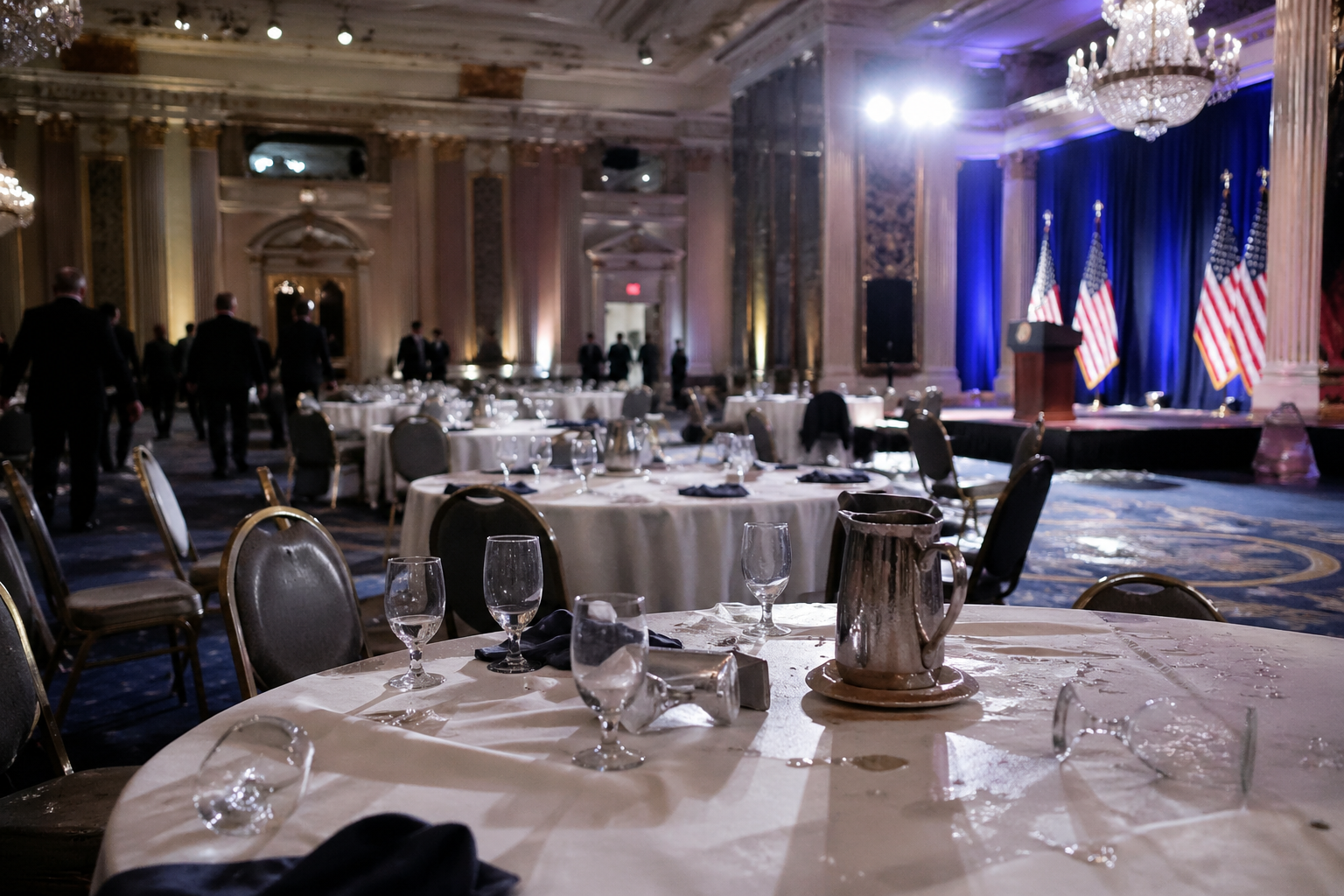

A night built around politics, media, and spectacle turned into something far more serious when gunfire disrupted the White House Correspondents’ Dinner in Washington. By April 28, 2026, the story had become one of the biggest political news events in the country, drawing intense attention not only because President Donald Trump was present, but because the case now sits at the intersection of security, political violence, and public trust.
For readers trying to understand why this story is dominating headlines, the answer is simple: it is not just about one frightening incident. It is about what the event revealed.
The Core Facts So Far
According to federal authorities, a man identified as Cole Tomas Allen was charged in connection with the shooting and accused of attempting to assassinate President Trump. The Justice Department said investigators believe Allen planned the attack in advance, including booking a room at the Washington Hilton weeks earlier and arriving in Washington on April 24, 2026.
Authorities say the incident unfolded on April 25, 2026, when Allen approached a security checkpoint near the ballroom and ran through a magnetometer while carrying a long gun. A Secret Service officer was struck in the chest but was protected by a ballistic vest, and officers returned fire before Allen was taken into custody.
That sequence matters because it immediately turned the story from a chaotic security scare into a major federal criminal case with national implications.
Why This Story Is Resonating So Strongly
The public reaction has been intense for several reasons.

A checkpoint-style editorial visual reflecting the renewed focus on security at high-profile political and media events.
First, the White House Correspondents’ Dinner is not an ordinary event. It brings together senior political figures, journalists, celebrities, and members of the administration in one highly visible setting. That concentration of power and attention makes any breach instantly bigger than a routine crime story.
Second, the incident touched a raw nerve in an already polarized political environment. Americans do not need much reminding that political violence has become a recurring fear in public life. Even when security ultimately prevents a worse outcome, the question that lingers is the same: how did a suspect get that close at all?
Third, the story has clear search-driven reader intent. People are looking for answers to basic but urgent questions: What happened? Was Trump hurt? Who is the suspect? How did security fail? What changes will come next? That makes it a particularly strong topic for a high-interest explainer article.
The Bigger Issue: Political Violence Is Now a Structural Story
The immediate headlines focus on the suspect, the charges, and the dramatic disruption of the dinner. But the deeper story is about the normalization of threat.
For years, political violence in the United States was often discussed as an exception. Now it is increasingly treated as a recurring risk around rallies, public appearances, and nationally significant events. That shift changes how the public interprets incidents like this one. It is no longer seen only as a shocking anomaly. It is also seen as part of a pattern.
That is one reason this case is drawing such broad attention. It forces Americans to confront the idea that institutions once defined by ceremony and access may now be judged just as much by their defensive posture as by their symbolic value.
Why Security Questions Will Not Go Away
Even though law enforcement stopped the suspect before a larger catastrophe unfolded, the incident is likely to trigger a prolonged review of event security.
High-profile gatherings in Washington often operate with layered protection, controlled entry points, and close coordination between agencies. Yet this case has already raised uncomfortable questions about perimeter design, screening procedures, threat detection, and emergency response inside venues hosting top government officials.
That matters beyond this single dinner. The political calendar never really slows down, and every public event involving national leaders now carries the burden of comparison. Future organizers will face pressure to prove they learned from this moment.
What Readers Should Watch Next
As the story develops, there are several angles worth following.
One is the legal case itself. The attempted assassination charge ensures close scrutiny of evidence, motive, and premeditation.
Another is the institutional response. There will likely be renewed pressure on the Secret Service, venue planners, and event organizers to explain how the breach happened and what will change.
A third is the political reaction. In moments like this, leaders often try to shape the story quickly, either as a warning about extremism, a case for stronger security powers, or a broader indictment of the national climate. Those responses can influence how long the story remains central in the news cycle.
Quick Takeaways
- This story is trending because it combines breaking news, political stakes, and obvious public curiosity.
- Authorities say the suspect planned the attack in advance and was charged with attempting to assassinate President Trump.
- The most lasting impact may be less about the dinner itself and more about what the incident reveals about political violence and security in the U.S.
- Reader interest is likely to remain high as the legal case and security reviews move forward.
Conclusion
The White House Correspondents’ Dinner shooting became a major story not simply because it was dramatic, but because it struck at a place Americans associate with visibility, power, and public ritual. When violence intrudes there, the story does not stay contained to one ballroom or one night.
It becomes a national mirror.
And on April 28, 2026, that is exactly why this appears to be the strongest trending topic of the day.
Sources
- AP: https://apnews.com/article/trump-correspondents-dinner-shooting-suspect-d4111facf965aaaa10334eb5c12901db
- U.S. Department of Justice: https://www.justice.gov/opa/pr/suspect-white-house-correspondents-dinner-shooting-charged-attempt-assassinate-president
- Reuters summary page: https://m.investing.com/news/politics-news/how-the-shooting-at-the-white-house-correspondents-dinner-unfolded-4637426?ampMode=1
- Google Trends-style roundup for April 28, 2026: https://www.latestly.com/google-trends/28042026/