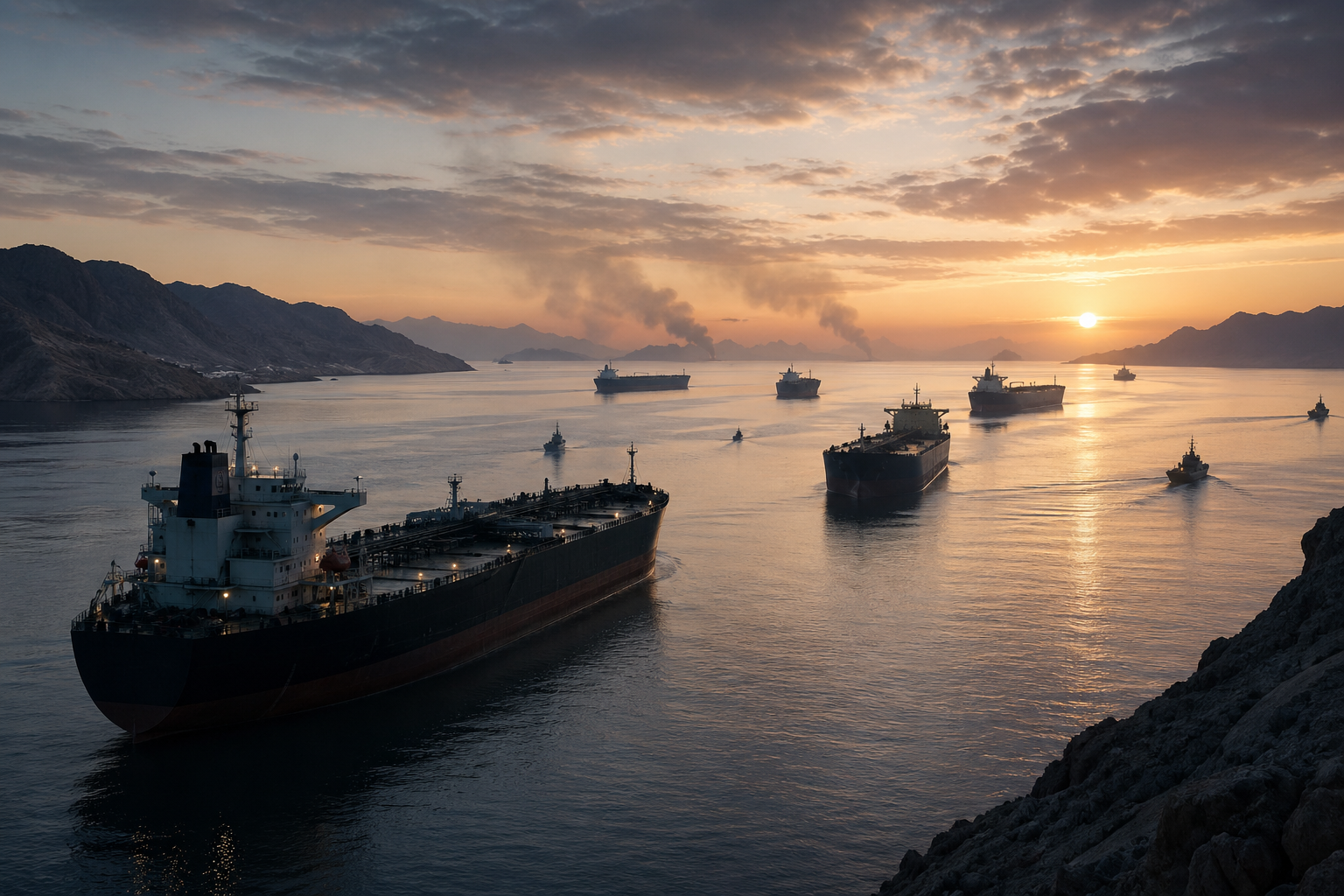

The biggest news story pulling global attention right now is not just the fighting itself, but the wider shockwave spreading from it. The Israel-Iran crisis has moved beyond a regional military confrontation and become a story about shipping, energy, diplomacy, and economic uncertainty. That is a big reason it continues to draw so much public interest.
At the center of the story is the Strait of Hormuz, one of the world’s most important shipping routes for oil and gas. When traffic through that corridor is threatened, the effects are felt far beyond the Middle East. Fuel prices, supply chains, freight costs, and investor sentiment can all move quickly.
Why the Strait of Hormuz matters so much
The Strait of Hormuz is a narrow passage linking the Persian Gulf to the open sea. In normal times, a huge share of the world’s traded oil and liquefied natural gas moves through it. That means any sustained disruption there becomes a global problem very quickly.
Recent reporting has highlighted just how serious the shipping strain has become. Thousands of seafarers and large numbers of vessels have been affected, with traffic running far below normal levels. That matters because shipping delays do not stay isolated. They ripple outward into insurance, freight pricing, commodity markets, and national energy planning.
In other words, this is not a story about one battlefield alone. It is a story about a pressure point in the world economy.
The diplomacy is just as important as the fighting

Officials reviewing maritime and diplomatic risks as the Hormuz standoff reshapes global politics.
Another reason the topic is drawing so much attention is that the political picture remains unstable. There is a ceasefire framework in place, but it is fragile. The latest Iranian proposal appears to focus first on reopening the shipping lane and ending the immediate military pressure, while postponing the hardest issue: Tehran’s nuclear program.
That creates a strange and uneasy moment. On one hand, the proposal suggests there is still room for negotiation. On the other, it also shows that the core disagreements are unresolved.
This is why audiences keep returning to the story. It is no longer just “war news.” It is now a live test of whether short-term crisis management can turn into a real diplomatic off-ramp.
What it means for ordinary people
For many readers, the relevance of this crisis comes down to practical effects.
If the standoff continues, the likely pressure points include:
- Higher oil and fuel costs
- More volatility in stock and commodity markets
- Delays or added costs in shipping and trade
- Greater uncertainty for governments trying to manage inflation
Even when people are not directly following the conflict, they are following the consequences. That is often what turns a major international story into a truly trending one.
What happens next
The next phase will depend on whether talks produce something more durable than a temporary de-escalation. Markets, governments, and shipping companies are all looking for the same signal: whether the Strait of Hormuz can return to stable, predictable use.
Until that happens, this story will remain one of the most closely watched topics in the world. It sits at the crossroads of war, diplomacy, and the global economy, which is exactly why it has broken out as such a powerful trend.
Conclusion
Right now, the Israel-Iran crisis is commanding attention because it affects far more than regional politics. The Strait of Hormuz standoff has turned the conflict into a global economic and diplomatic story, with consequences that could reach households, businesses, and governments well beyond the Middle East.
That combination of urgency, uncertainty, and real-world impact is what makes it one of the most important trending topics of the moment.